Comfort, textiles, and everyday care
Choosing a Bath Robe: How Fabric Weight and Weave Shape Comfort
A bath robe is a small shelter between the water and the rest of the day. Its fiber, fabric weight, and weave determine whether it feels airy or enveloping, dries quickly or holds moisture, and moves easily as you reach for a towel or settle into a quiet morning. Understanding those details can make it simpler to choose a robe suited to your climate, routine, and preferences.
Published November 10, 2026
A familiar layer with a job to do
After a bath or shower, the body is warm and damp while the surrounding air may feel cool. A robe helps bridge that change. It can absorb a little moisture, provide warmth, preserve modesty, and offer an easy layer for dressing or unwinding. But not every bath robe performs those tasks in the same way. A dense, plush robe may feel reassuring in a chilly bathroom, while a lighter cotton robe can be more comfortable in a heated home or a warm climate.
The difference begins with the cloth. Fiber type matters, but so do the way yarns are arranged, the amount of material used, and how the garment is cut. Two robes made from cotton can feel strikingly different: one may have a flat, smooth surface; another may be looped, textured, or knitted. Even the same fabric can feel warmer or cooler depending on its weight and how loosely it is constructed.
Rather than choosing by softness alone, consider the moment when you expect to wear the robe. Will you put it on while still damp, or only after drying off? Will you wear it for a few minutes or linger in it over breakfast? Will it hang in a humid bathroom, or have time to dry fully between uses? These practical questions offer a better starting point than a label such as “luxurious” or “lightweight.”
What fabric weight can—and cannot—tell you
Fabric weight describes how much a given area of material weighs. In towels and some bath textiles, it is often reported in grams per square meter, or GSM. A higher GSM commonly indicates a denser or thicker cloth, though the number alone does not reveal everything about how a garment feels. Yarn, weave, finishing, and cut all shape the final experience.
In broad terms, a lighter robe tends to feel less bulky and may be easier to pack, hang, and move around in. It can suit warm weather, a well-heated home, or someone who prefers a breathable layer rather than a blanket-like wrap. A heavier robe often provides greater coverage and a more substantial sense of warmth. It may be welcome in winter or in a cool room, but can feel cumbersome if the wearer wants to move freely or if the robe takes a long time to dry.
Weight is not a reliable shortcut for absorbency. A dense fabric may take up more water, but it may also hold that moisture longer. A lighter fabric can dry more quickly, depending on fiber and construction, but may not feel as plush. Absorbency and drying speed are related to the cloth’s structure and the conditions around it: ventilation, humidity, the way a robe is hung, and how frequently it is used all play a part.
There is also the question of warmth. Thickness can trap still air close to the body, helping a robe feel insulating. Yet a robe that covers more of the body and fits comfortably may feel warmer than a heavier garment that gaps open or restricts movement. A roomy cut allows air to circulate, which can be welcome in a warm setting but less so when the room is cold. Fabric weight is one useful clue, not a complete verdict.
When product information does not list a precise weight, use other details to understand the likely feel: whether the fabric is described as looped, terry, waffle, knit, or lightweight; whether it is lined; and whether the garment is intended primarily for drying or lounging. If possible, assess the material in person. A brief touch can reveal texture and drape, though it cannot tell you exactly how the cloth will behave after repeated washing.
The weave beneath the surface
Weave is the arrangement of yarns that creates a fabric’s structure. In a bath robe, that structure affects texture, thickness, airflow, flexibility, and how the garment rests against the skin. The term “weave” is sometimes used casually for knitted fabrics too, but knitting forms cloth by interlocking loops of yarn rather than crossing lengthwise and crosswise threads. Both methods can make comfortable robes; they simply create different characteristics.
Terry: loops built to catch moisture
Terry cloth is recognized by its raised loops. Those loops increase the surface area available to meet moisture and create the familiar cushioned texture of many bath towels and robes. Terry can feel cozy and absorbent, making it a natural choice for someone who wants to put on a robe after toweling off only briefly. The trade-off is that a robe made from substantial terry can feel thick and may need more time and space to dry than a lighter construction.
Loop height, density, and yarn all influence the feel. Long, generous loops can create a plush hand, while shorter or more compact loops may produce a firmer surface. A robe’s seams, collar, cuffs, and belt also add layers of cloth, so the overall garment can feel heavier than a towel of similar material.
Waffle: texture with open spaces
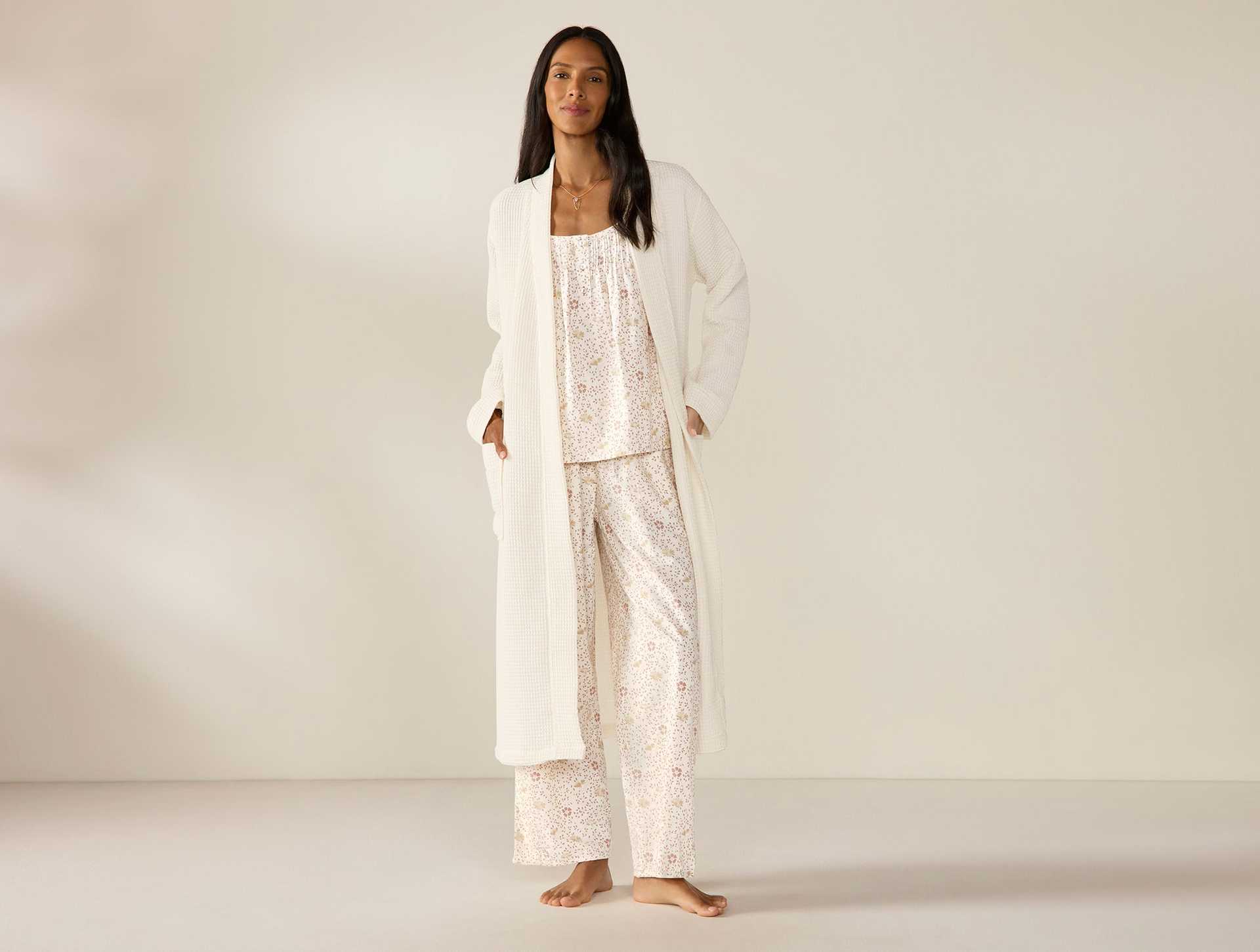
Waffle cloth has a grid-like surface formed by raised squares and recessed channels. The texture gives the fabric dimension without requiring the deep pile associated with many terry robes. Depending on its weight and yarn, a waffle robe may feel airy and comparatively easy to move in, while still offering a comfortable layer for drying off or lounging.
The open texture can also help a robe feel less dense against the body. That does not mean every waffle robe is automatically cool, highly absorbent, or quick-drying: the fiber, thickness, and construction still matter. But for people who find plush robes too warm or bulky, a waffle texture is often worth considering. The Unisex Organic Waffle Robe, for example, is made from organic cotton in an airy waffle weave and is described as breathable and lightweight. Its double belt loops allow the self-tie to be positioned at different heights, while spacious hip pockets add everyday utility.
Flat and smooth cotton fabrics
A robe made from a flatter cotton fabric may have less loft than terry, with a cleaner, more streamlined feel. It can be appropriate for light coverage, travel, or an indoor routine where strong absorbency is not the main requirement. Because “flat cotton” covers many constructions, details can vary widely. Check whether the cloth is woven or knitted, how substantial it feels, and whether the care instructions suggest special handling.
Knits: flexibility and drape
Knitted fabrics are formed from loops, giving many of them a degree of stretch and flexibility. That can make a robe feel soft and easy to wear, particularly when the design is intended for lounging rather than drying. Knits may drape differently from woven cloth and can change shape with wear or laundering, so follow the garment’s care label and avoid assuming that all cotton behaves identically. A knit robe can be a comfortable choice for relaxed indoor use, while a looped towel-like robe may be better suited to absorbing water.
Cotton: a versatile fiber, not a single sensation
Cotton is widely used in bath textiles because it can feel soft, absorb moisture, and tolerate routine laundering when cared for as directed. Yet the word “cotton” does not specify how a robe will feel. Yarn length and quality, spinning, fabric structure, finishing, and garment design all contribute. A cotton robe can be crisp, supple, nubby, plush, airy, or dense.
Some robes are made from organic cotton. Certification information can help clarify how a product’s fiber and processing have been assessed under a particular standard. Read the stated certification and scope rather than treating the word “organic” as a promise that every part of a garment has identical environmental or performance characteristics. Certifications, fiber content, and care details answer different questions.
It is also useful to distinguish a robe intended to absorb water from one designed mainly as a comfortable layer. A robe may serve both purposes, but not every garment does them equally well. If you usually towel-dry thoroughly before dressing, an airy robe may be all you need. If you put it on while your skin is still damp, a more absorbent construction may be preferable. Choosing for the actual routine avoids paying for thickness you will not enjoy—or expecting a light garment to function like a bath towel.
Fit, movement, and the small design details
A robe is not simply fabric wrapped around the body. Its cut determines whether it stays secure, whether the sleeves get in the way, and whether it feels comfortable while sitting, reaching, or walking. A generous fit can be pleasant for lounging, but excess length or very wide sleeves may catch on handles, furniture, or countertops. A closer fit may feel more streamlined but can be restrictive if the shoulders, chest, or hips are too narrow.
Before choosing, consider sleeve length, robe length, collar shape, and the overlap at the front. A secure overlap can help retain warmth and coverage. A belt should tie comfortably without pulling the garment out of shape. Multiple belt loops can make it easier to adjust where the tie sits; pockets are useful for small items or simply for resting hands, but they add another layer of cloth and stitching.
Think about how the robe will feel after bathing. Damp skin and wet hair can make a bulky collar or heavy sleeves feel more noticeable. If you will use the robe while getting ready, an easy-to-move-in cut can matter more than maximum warmth. If it is primarily for quiet evenings, softness and coverage may take priority. The best robe is not necessarily the thickest; it is the one whose construction makes sense for the way you live.
Match the robe to the room and the routine
Climate affects comfort, but so does the indoor environment. A cool bathroom with tile floors calls for a different layer from a warm, humid space. In a dry, chilly home, a denser robe may help hold warmth while you dress. In a heated apartment or a tropical climate, an airy cotton robe may be more comfortable and less likely to feel stifling.
Frequency of use matters, too. A robe worn every morning needs to be easy to wash and capable of drying between uses. A thick robe hung in a poorly ventilated bathroom may remain damp for longer than is comfortable. A lighter robe may dry more readily, but it may not provide enough insulation for a cold winter morning. Where and how you hang it can influence the experience as much as the fiber label does.
For travel, consider weight, packing volume, and how quickly the robe can dry. For a shared household, look for a fit and length that suit the wearer and a fabric that can handle regular laundering. For a post-bath ritual focused on lingering warmth, prioritize coverage and a soft, substantial hand. There is no universal ideal: the right balance changes with season, home, and habit.
- For warm rooms: consider a lighter, breathable construction such as a modest-weight waffle fabric.
- For cool mornings: look for greater coverage and a denser cloth, while checking that the robe remains comfortable to move in.
- For putting on damp skin: prioritize a fabric with a towel-like, absorbent structure.
- For lounging after drying off: softness, fit, and breathability may matter more than maximum absorbency.
- For frequent use: choose care instructions you can follow consistently and allow the robe to dry fully between wears.
Care that preserves comfort
Washing affects the feel and useful life of a robe. Follow the garment label first, since finishes, construction, and fiber blends can differ. Many cotton robes can be machine-washed, but water temperature, cycle, detergent, and drying method can influence softness, shrinkage, and shape. A robe’s care label is not a minor detail: it is part of the information needed to judge whether the garment fits your routine.
Wash similar colors together and avoid overloading the machine, which can limit rinsing and movement. Use detergent according to its instructions. Excess detergent can remain in fabric, while aggressive treatments may affect color or texture. Fabric softener is not necessary for every robe; it can leave a coating on some textiles and may alter how absorbent a cloth feels. If the manufacturer recommends a gentle cycle or cold water, follow that guidance.
When tumble-drying is allowed, use the recommended heat setting and remove the robe promptly. High heat can contribute to shrinkage or wear, particularly when the cloth is already warm and damp. If air-drying, spread the robe out or hang it where air can circulate rather than leaving it bunched on a hook. Letting it dry fully between uses helps prevent the lingering dampness that can make any textile feel less inviting.
Some natural-fiber garments may shrink slightly with washing and drying. A product description may note this in advance; if so, account for it when assessing fit. Waffle fabrics can also become more supple with laundering, and textured or knitted cloth may change in shape if stretched while wet. Handle the garment gently, avoid pulling it into place by the belt, and use the care instructions as a guide to preserve its intended drape.
A practical checklist before choosing
When comparing bath robes, start with your own routine rather than an abstract idea of luxury. A robe’s comfort emerges from several details working together, and a small checklist can help bring them into focus.
- Purpose: Is the robe for drying, warmth, dressing, travel, or relaxed indoor wear?
- Texture: Would you prefer terry loops, a waffle surface, a smooth weave, or a flexible knit?
- Weight: Do you want an airy layer or a more substantial wrap?
- Absorbency: Will you wear it while damp, or after toweling off?
- Fit: Check length, sleeve room, front overlap, belt placement, and ease of movement.
- Drying conditions: Can the robe hang in a well-ventilated place between uses?
- Care: Are the washing and drying instructions practical for your household?
- Material information: Review fiber content and any certification details that matter to you.
These questions can narrow a crowded field without reducing the choice to a single number or buzzword. Fabric weight offers a helpful clue, but weave and construction explain why two robes of similar weight can feel different. Cotton provides a familiar base, yet its surface and behavior depend on how it has been made. Fit shapes warmth and movement, while laundering determines how the fabric performs over time.
Comfort is a balance, not a specification
A good bath robe works quietly. It absorbs or releases moisture at a pace that suits the wearer, protects against a chill without becoming cumbersome, and feels natural through the ordinary motions of a morning or evening. The fabric is only one part of that experience. The weave, weight, cut, climate, and care routine all contribute.
For one person, comfort may mean the plush embrace of a dense, looped cotton robe. For another, it may mean the easy airflow of a lighter waffle cloth. Neither preference is more correct. The useful choice is the one that meets the conditions of your home and the rhythm of your day. Read the construction details, be realistic about laundering and drying, and pay attention to how you plan to wear the garment. In that combination of material and habit, a simple robe becomes a dependable layer between bathing and whatever comes next.